
I knew almost nothing about Afghan food beyond what’s on television. I presumed it would run close to Pakistani cooking. What stays with me a week later is not what Afghan food is, but what it isn’t. The Indian subcontinental cuisines I know are built on heat, ferocity and spice. Afghan Kabab Village’s menu shares a recognisable vocabulary, pulao and kababs and naan, but Afghan cuisine is the gentler cousin.
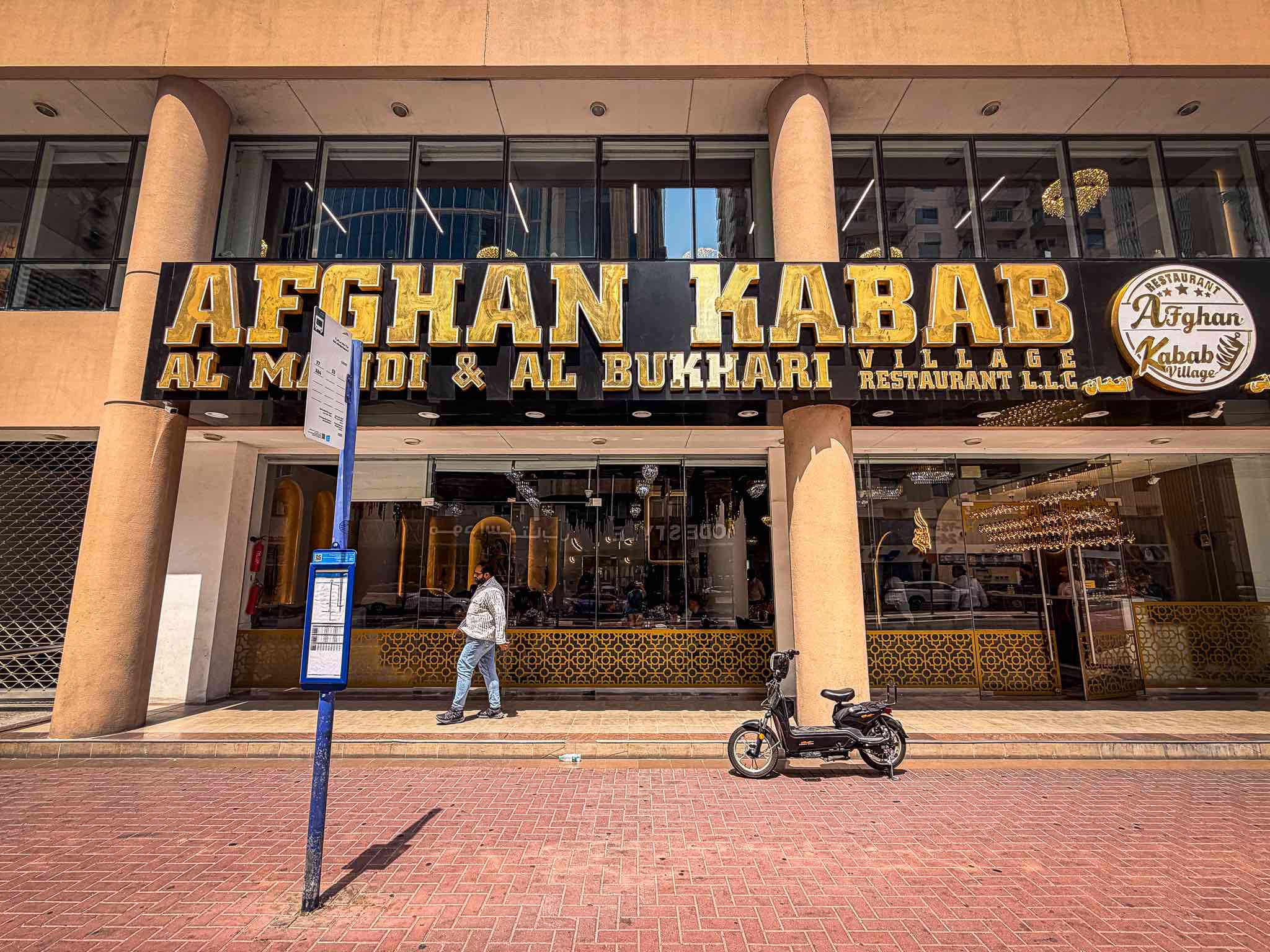
A friend with a taste for this sort of expedition assumed, as I had, that Afghan Kabab Village would be quiet, intimate, perhaps little known. It is none of those things. It is enormous, frankly palatial. I suspect the word village refers to its floor capacity. Five hundred covers, the waiter confirms, turning steadily through the afternoon. The frontage beams with gold, a pervasive, eyebrow-raising chintz carried inside through pastiche chandeliers, mirrored columns and a vast screen cycling footage of people ambling around what looks like Copenhagen in winter.
Some decor is done with real care. Downstairs suits solo diners and quick lunches. Go upstairs, sit on the takht (the raised platform) that runs the perimeter, laid with toshak (long floor mattresses) and settle into the balesht (bolsters) against the wall.
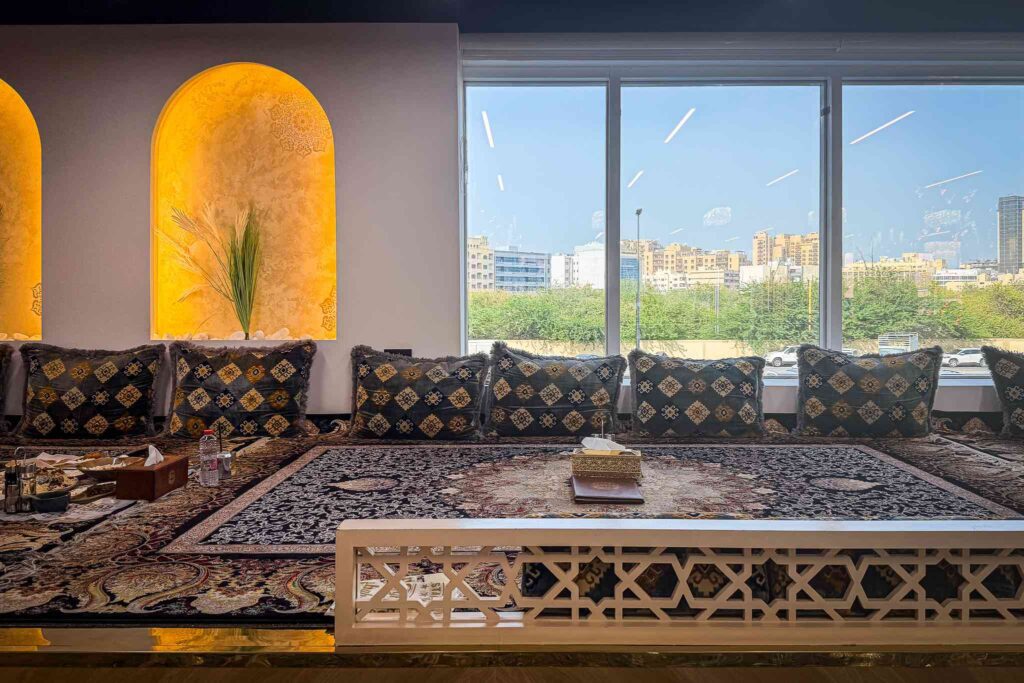
A drift of shoes at the foot of the takht, and we sit barefoot and cross-legged, eating from the dastarkhan; here, a sheet of thin plastic protects the rugs beneath us. Above me, lit within its arch, sits a hand-painted replica of Steve McCurry’s portrait of the green-eyed Afghan girl, staring back at the room.
Men congregate under the portrait, huddled over mutton mugalgal and pulao with shami kabab. Beside me, one man nurses a green tea and eats the bones clean off a chupan kabab. Another stands, turns slightly, and bows his head in quiet prayer.
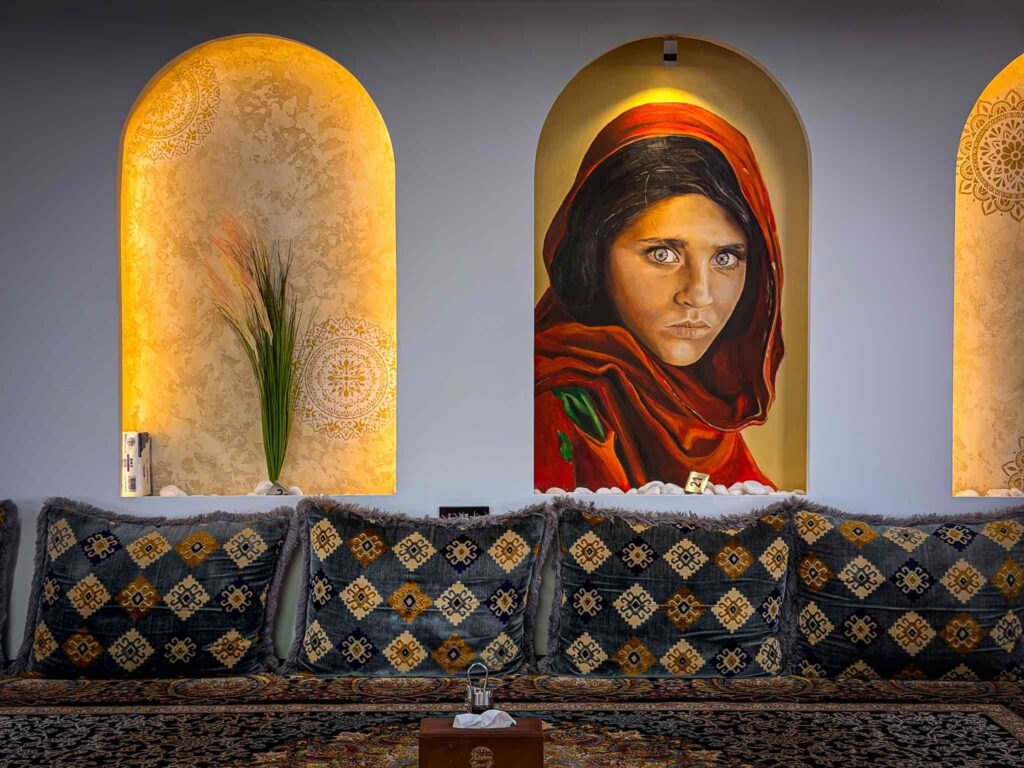
So much of this room feels both familiar and new. I do not know how to be here. Whether to take my shoes off at the step or before it, whether to fold my legs or stretch them, whether looking around registers as curiosity or intrusion. It is also true that almost everyone here is a man, and that the only woman I deal with all afternoon is the one who cajoles me into the mutton pulao.

She, veiled and persuasive, arrives with a tome of a menu. I eye the jewelled sada pulao, a crimson chicken karahi with red onion and green chilli, a dam wreta platter slow-cooked to mahogany.
Ten or so of the hundred-plus dishes here are Afghan, in a book that also runs to mandi, korma, dum pukht, hummus and a full page of Gulf seafood. Come to think of it, the receipt is headed Afghan Kabab Al Mandi Bukhari Restaurant L.L.C. Three cuisines in the licensed name, and only one appears over the door.
The first thing to arrive is not discernibly Afghan at all: courtesy plates of Levantine fattoush and a chicken soup thickened almost to gelatine with a purr of black pepper. It is unmemorable, and I mean that kindly, because the gesture matters more than the bowl.
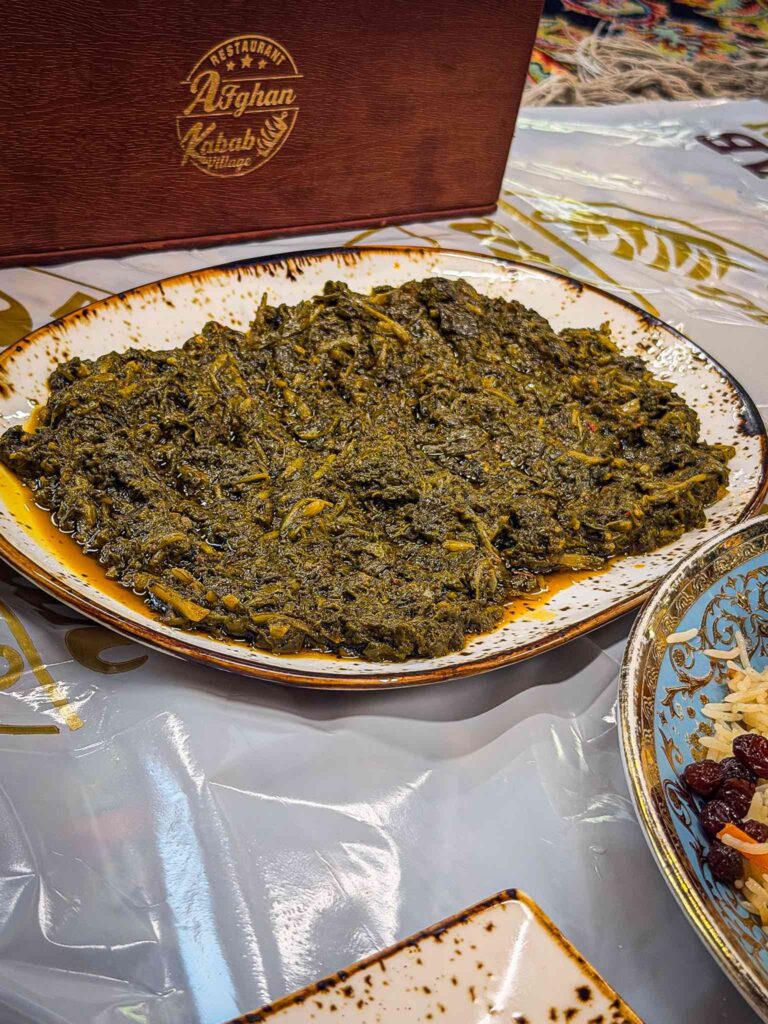
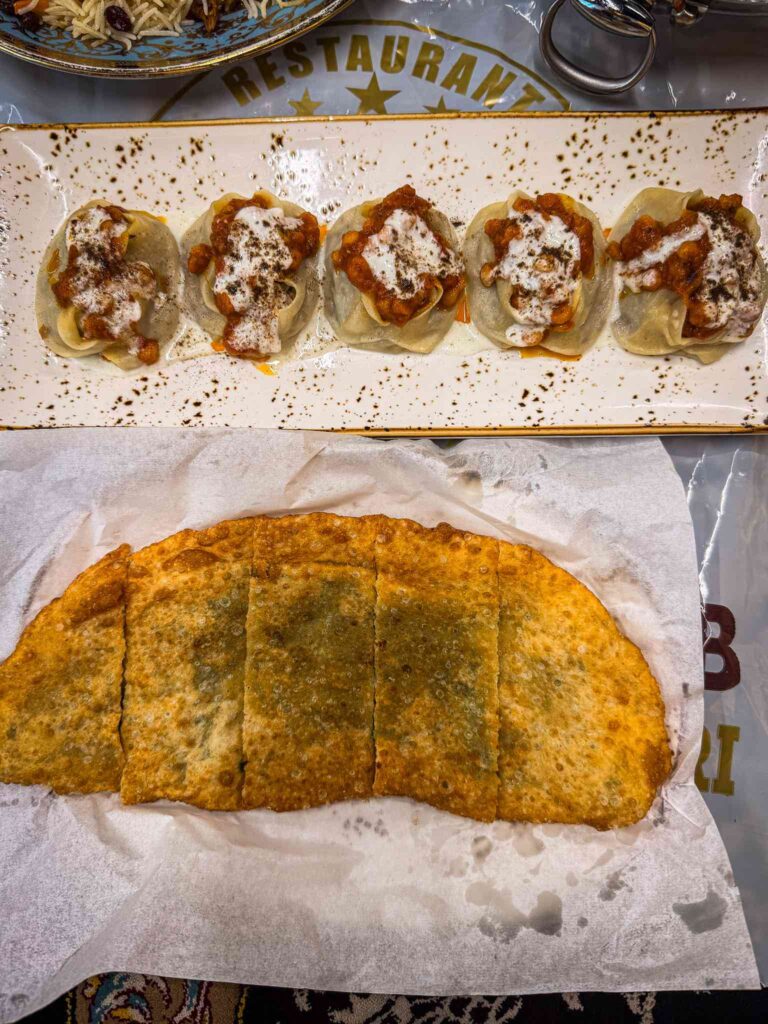
Next, an intense plate of palak, greener and more pungent than any spinach I know, steeps in pools of oil stained mustard yellow by the leaf. In its simplicity, it is among the best things we eat. An onion bolani is paper-thin and allium-forward, less a dish than something you would eat standing roadside.
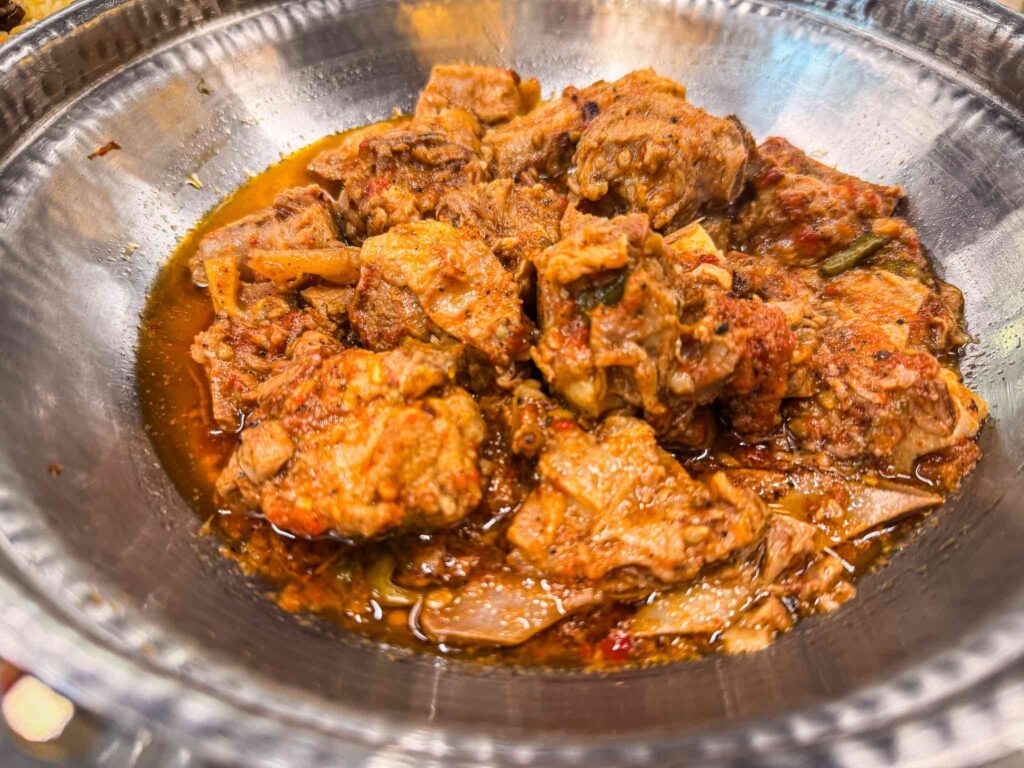
The naan is the size of a two-year-old, bronzed, blistered, seeded with sesame and nigella, glossy and slightly sweet, built for scarpetta duty against the Nisar Charsi Karahi. Every other karahi I have eaten arrives eye-swellingly spicy. This one leaves a thick, hearty gravy, comfort food while you gnaw softly cooked mutton from the knuckle and joint. It is Braille for the teeth.
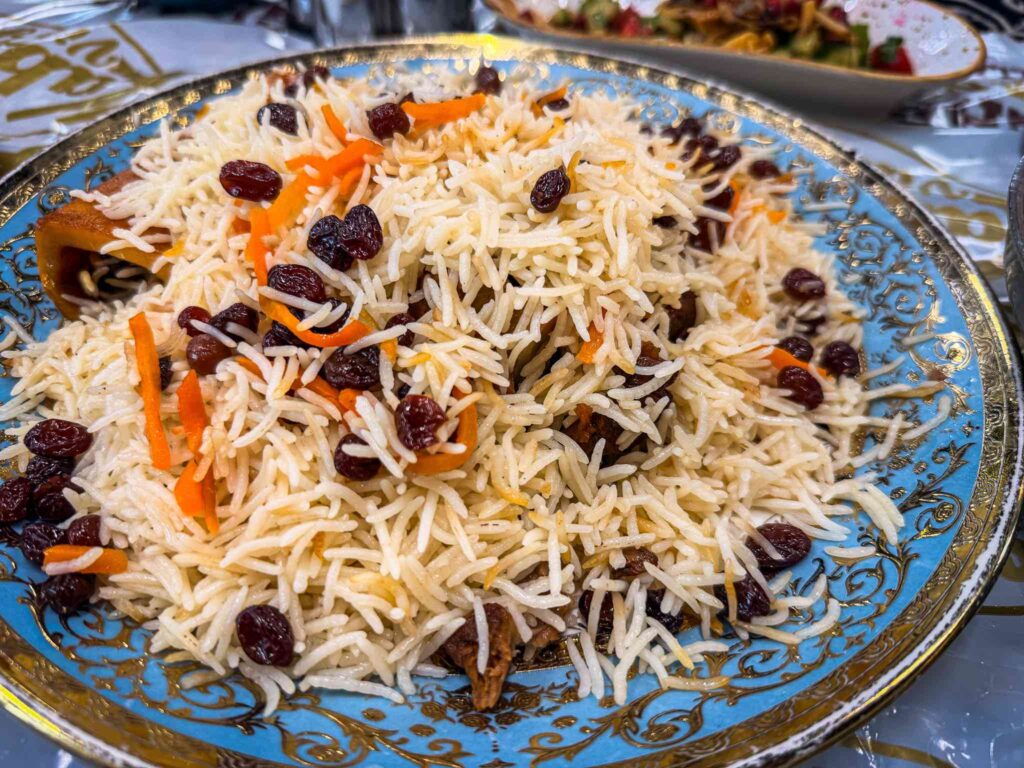
The nudged favourite, the mutton pulao, is better than anything from my kitchen. The rice grains sit separate and fine, glistening with fat, and a sweet undercurrent rolls in from gently cooked carrots and dark, plump raisins.
The home-style mantu dumplings, somewhere between Turkish manti and a Georgian khinkali, are thick-cased, heavy food for fuel. Meaty lamb parcels, lightly spiced, topped with what could be dal lentils, the yoghurt brightening them with a welcome acidity. Order this and curl up for a nap.
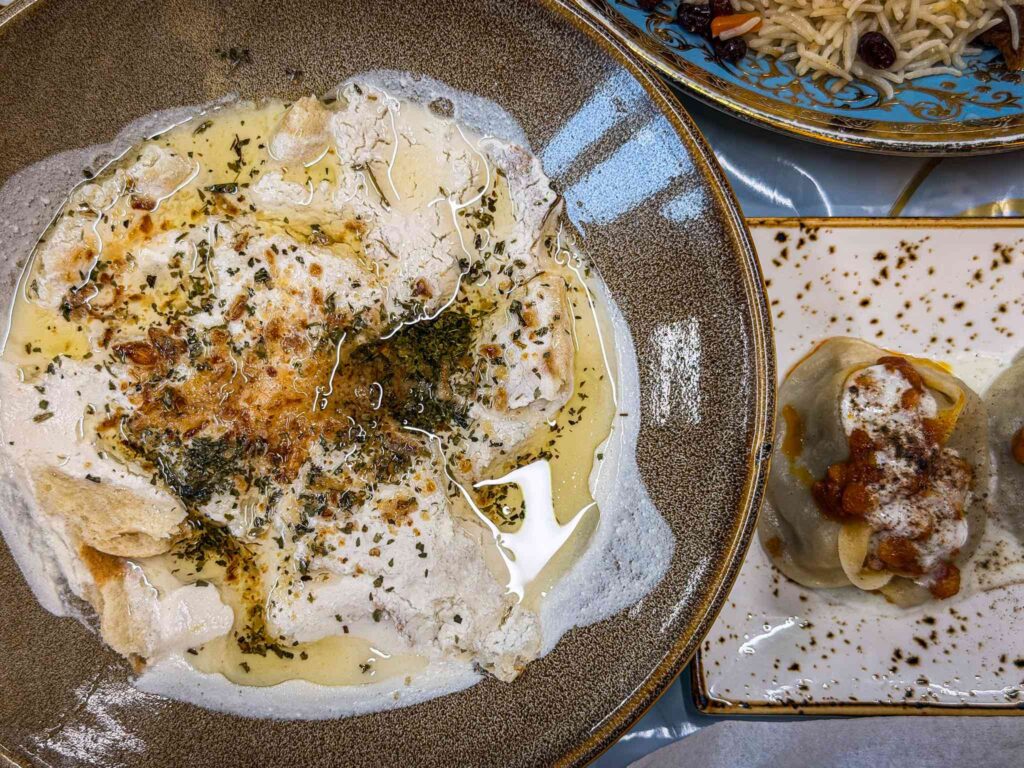
The qurooti is more thought-provoking than enjoyable. Pungent, slightly sour, almost goat cheese: salted hung yoghurt worked to a thick paste, torn bread soaked through it, then carpeted with crisp onion, garlic and the tingle of dried mint. Our curiosity is sated. We will not order it again.
Throughout the staff are softly spoken and unhurried; one walks me round the room and explains the place has been open about a year, with some forty on the payroll. There is an unmistakable generosity to the operation. I went looking for Afghan food and found a Deira all-rounder that cooks a very good palak and pulao. I cannot point at one dish and tell you to cross town for it, but taken together, this is home cooking of the sort managed by aunties who were always the best in the village. We finished the way we started, on our backs, rubbing our stomachs.
I would. Enormous sections of the menu remain a mystery to me, and it seems almost sacrilege to eat in a Kabab Village and not order the kababs. I intend to remedy it.
Large groups. Anyone looking for affordable eating in Dubai. Anyone after something a little different. And above all, those who hold comfort food higher than finery or fireworks.
Visits: one
Licensed: No
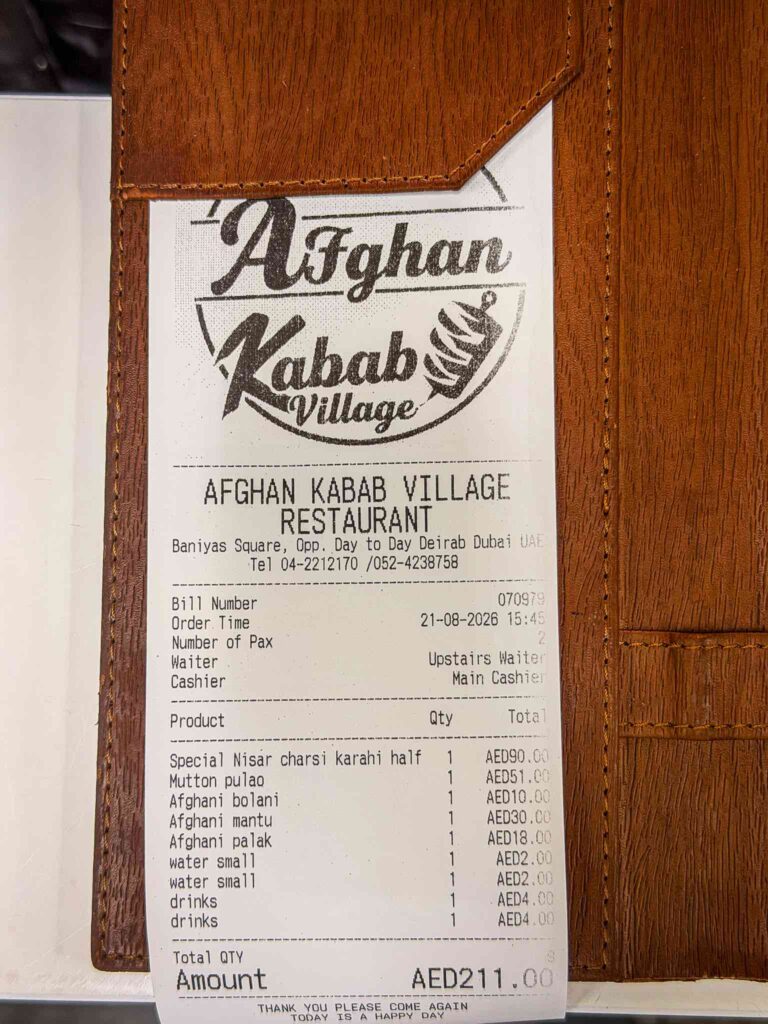
Ordered (in AED): Special Nisar Charsi Karahi, half (90); Mutton Pulao (51); Afghani Mantu (30); Afghani Palak (18); Afghani Bolani (10); water and soft drinks (12). The Afghan Qurooti appears to have been comped without our knowing.
Total spend (in AED): 211 for two, including taxes, excluding tip.
Afghan Kabab Village, Al Maktoum Road 5/1, Al Rigga, Deira, Dubai, United Arab Emirates. For more details, contact +971 52 423 8758 or visit Afghan Kabab Village’s Instagram.
Liam is a food and travel writer based in the Middle East. He co-authored The Rise of Indian Food: Recipes Reimagined by Trèsind Studio, out now and available here. Published by Phaidon Press. Photography by Shresth Maloo. Liam owns EatGoSee and contributes to other publications. You can find Liam on Substack, Threads and Instagram.